Understand the law
How Australian courts and tribunals work, and how a case moves through them. Every page here is general information about the system, written for people who represent themselves.
Australia's court hierarchy
One map shows Australia's two court systems, the federal courts and every State and Territory system. It shows what each court and tribunal hears and how an appeal moves up, and every court has its own page.
Open →Start here
Start here is for anyone not sure where to begin. It is set out by the stage a case has reached, and each stage links to what to read first and the tools that help with preparing.
Open →Areas of law
The law is sorted into areas. The area that your matter might belong to points you to the court that will likely hear it and the rules that apply.
Open →
 Did you know?The figure of Lady Justice on the courthouse changed her meaning more than once.
Read the story ↓
The figure of Lady Justice on the courthouse changed her meaning more than once, and the people who sculpted her kept choosing what she should stand for.
The scales are the oldest part of the figure, older than Lady Justice herself. Egypt weighed the heart against the feather of Ma'at long before Greece had a Themis. The scales decide the case.
The sword does the other half of the job, which is to make the decision count, because a judgment nobody enforces is only a paragraph. Some sources say the sword must hang lower than the scales, so that punishment follows weighing, but that is a convention rather than a rule, and the statues do not agree. On the Old Bailey's statue the sword is raised high.
The Old Bailey's gilt statue, raised in 1906, has no blindfold, by deliberate choice. The court's own explanation was that her maidenly form already guarantees impartiality and the cloth would be unnecessary.1 Frankfurt's Justitia has stood clear-eyed on the Römerberg since 1543.2
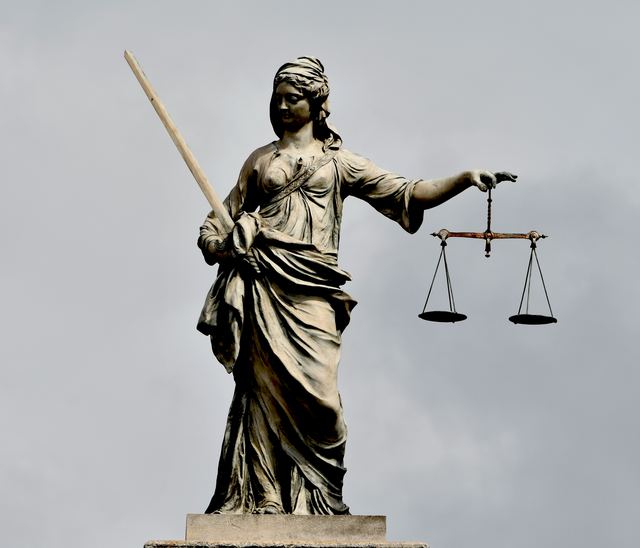
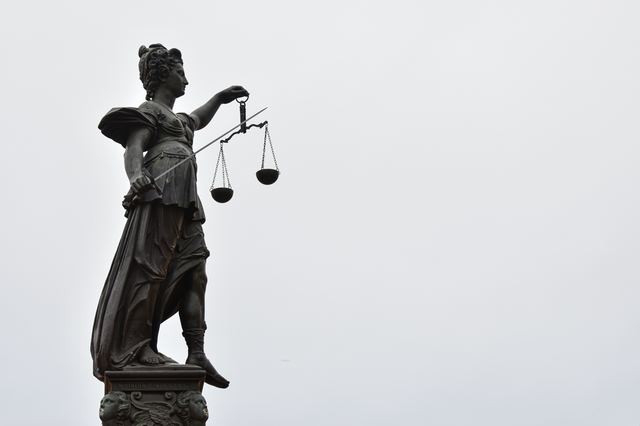
- F. W. Pomeroy (opens in a new tab), installed October 1906. "Maidenly form" is the court's own published explanation.
- Justitia on the Römerberg (opens in a new tab) since 1543.
Looking for something else?
Use the Suggestion Box to tell us what you expected to find. LIPSA reads the suggestions and uses them to grow the library.